We grow for the health you deserve
Produce today looks perfect, but often sacrifices nutrition. We saw fields heavy with sprays and seeds chosen for shelf-life — not for health. We decided to change that.
After six months of hands-on research, tasting and careful harvest trials, we tuned our light, seed selection and timing to harvest microgreens at the exact moment they carry the most nutrition — tiny leaves, concentrated benefits.
7–14
Harvest days
upto 40×
Nutrient density
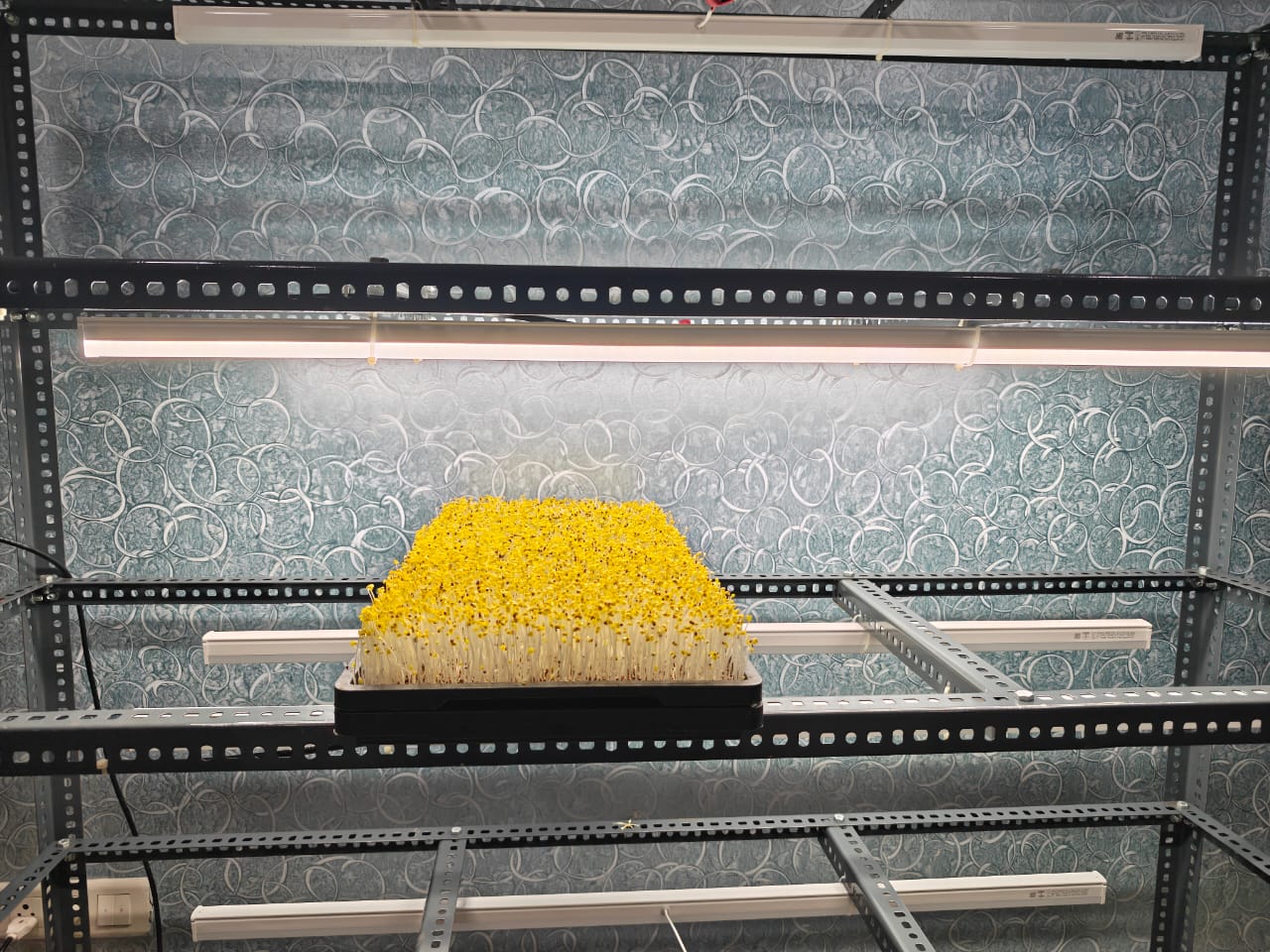
From a tray to your table
We started small - One tray, One dream - Now many tables, One purpose: Bringing real nutrition to every one.